View the complete Newsletter here. What follows is the first page article:
THE YEAR OF GRACE
The (Roman) Catholic bishops of Australia at Pentecost this year, called for this year to be observed as a 'year of Grace', and they chose an icon from Mount Sinai as the official image for this special year.
The old Roman world which was affected by Christ and His followers very soon after the Resurrection, was familiar with the idea of ’gratia'. 'Gratia' described the state you found yourself in when someone had been good to you, more often than not out of the goodness of that person's heart and not because you had previously done that person a favour. And when a person Q do you a favour, especially an unasked for favour, you expressed your feeling of ‘gratia' - your feeling of friendship and goodwill - towards that person. This Latin custom after many centuries, eventually passed into English and so we still call the prayer of thanksgiving before and after meals 'grace' (Latin gratia >French grâce > English grace).
When the Son of God was born into the human race, and particularly after His Resurrection from the dead, this idea of ‘gratia‘ took a quite new focus. Till then, the feeling of goodwill and appreciation had been focussed chiefly on personal favours from other people. But when God began to live His life within us and through us by means of the new reality of Baptism, God Himself became the new focus of ‘gratie’ or grace ; and thus, we became its focus too. 'Grace' in the New Testament refers to the goodwill and appreciation generated by a good relationship with God the unearned consolation of the love beaming into the world from the face of God. This is true ‘gratia' and is only very inadequately described in human words. It is when we are living (preferably consciously) enveloped in this love from the face of God, that we more easily extend the 'gratia' in turn to our neighbour.
This wonderful relationship with God is His free gift to us - a 'grace' or gratia’ in the fullest sense possible. This is why the Catechism of the Catholic Church says "Grace is favour, the free and undeserved help that God gives us to respond to His call to become children of God.....partakers of the divine nature and of eternal life" (no. 1996). Then it goes on to be more precise: "Grace is a participation in the life of God." (no.1997} And so, the more we become sharers in the life of God the closer we are to Him, and the more intensely we exist in the ‘state of grace'. We can never be ‘worthy’ to share in the life of the One who created us -- it can only be His grace, His totally free gift.
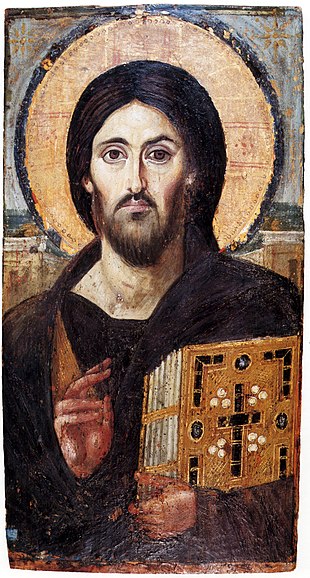
The motto for this year of Grace is ”Contemplate the face of Christ". And to help us concentrate our thoughts in this direction, the bishops have put before us the 'Pantokrator' icon from St Catherine's monastery on Mt Sinai. In the second letter to the Corinthians (4:6) St Paul talks about the grace that comes to us from the face of Christ:
For God who said, "Let light shine out of darkness”, has shone in our hearts to bring to light the knowledge of the glory of God on the face of Christ."
Devoting these coming months to the task of learning how to contemplate the face of Christ is undoubtedly a worthy way for us to spend our time. It is Gocl'5 grace that shines our hearts. We need to let it in! If thls year of Grace can bring us closer to the face of Christ and its glory, then it will have been a most successful year. And a most profitable journey!
-- Fr Laurie Foote OP, Catholic Chaplain to Monash University
of the Archdiocese of Melbourne.


